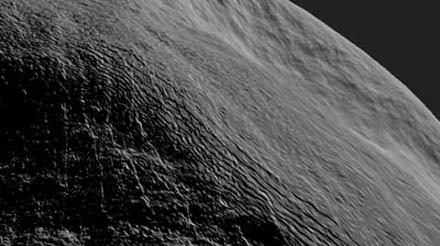
Making Worlds: Introduction
For the past year or so I've been reacquainting myself with an old friend: C++.
More specifically, I've been exploring graphics programming again, this time with the luxurious flexibility of the modern GPU at my fingertips. To get me started, I shopped around for an open source engine to play with. After trying Irrlicht and finding its promises to be a bit lacking, Ogre turned out to be a really good choice. Though its architecture is a bit intimidating at first, it is all the more sound. More importantly, it seems to have a relatively healthy open-source community around it.
So with Ogre as my weapon of choice, I've started a new project: Making Worlds. More specifically, I want to procedurally generate a 3D planet, viewable from outer space as well as the ground (at flight-sim levels of detail), which can be rendered real-time on recent graphics hardware.
Why? Because I really like procedural content generation. It's an odd discipline where anything goes, and techniques from across mathematics, engineering and physics are applied. Then, you add a good dose of creativity and artistic sense, and perhaps mix in some real-world data too, until you find something that looks right.
Plus, far from being an exercise in pointlessness, procedural content is gaining in popularity, especially for video games.
So, in the style of Shamus Young's excellent Procedural city series, I'm going to start blogging about Making Planets. Unlike him however, I'm not going to adhere to a strict schedule.
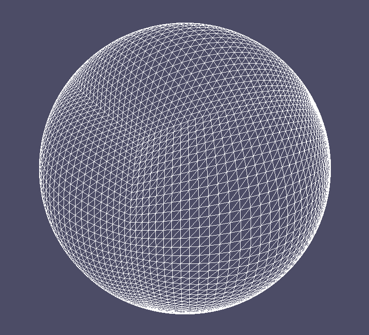
Here's a teaser for the first installment.