Today at BazCamp YVR I gave a short presentation and demo of my "Making Worlds" project, as well as an overview of procedural content generation in general.
The slides are available for download.
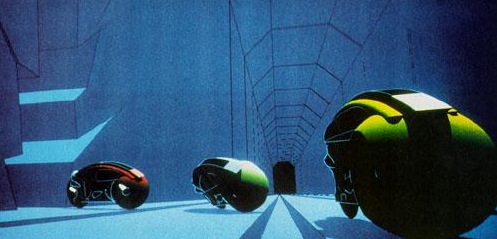
Today at BazCamp YVR I gave a short presentation and demo of my "Making Worlds" project, as well as an overview of procedural content generation in general.
The slides are available for download.
Last month, I attended the Open Web Vancouver conference. Without a doubt, I thought the most interesting talk at the whole conference was Rick Falkvinge's keynote session about the Swedish Pirate Party.
You may have heard of the Pirate Party. Founded in 2006, the popular image is that of an anarchist movement that grew out of the sense of entitlement of media pirates on the internet. It is said that these people want to abolish modern copyright for purely selfish reasons. Unfortunately this is not just a tired old stereotype, but completely wrong.
Thankfully, Rick's entire session is available online. In one hour, he calmly and intelligently explains his vision. He shows that the Pirate Party's agenda is about civil liberties, and part of a discussion that has been going on for centuries. By tracing back the history of copyright, he shows a clear pattern: when new technology threatens established powers and businesses, those powers try to use legislation to protect themselves and maintain control. It started with the printing press, and continues today with the internet and file sharing technologies. He shows how we've already allowed the establishment to create legislation that tries to control its true potential, and how we need a political countermovement that represents all the interests of a free, digitally liberated society.
You can watch the entire presentation below. The slides with illustrations and stats are available as well.
Part 1: </embed>
Part 2: </embed>
After the talk, I got the chance to ask Rick something I'd been wondering for quite a while: whether he thought that the "pirate" label had helped or hurt their cause?
His answer was very clever: while it is obviously a controversial name, it gave their movement a lot of much needed exposure very early on, which they wouldn't have gotten otherwise. But more than that, by adopting the "pirate" moniker, they clearly state that they intend to change the meaning and perception of that word. Hence it prevents the copyright lobby (and anyone else) from using it as a slur to delegitimize their movement.
So please don't let the "pirate" label scare you off or assume that the issues they are championing are not serious, because they really are.
In fact, the entire world got a demonstration of this last month when in Iran, post-election protests erupted after accusations of election fraud. The Iranian government denied the accusations and tried to snuff out the dissent, by any means necessary. The suppression of free communication was an essential part of this, and was mostly successful. However, thanks to modern, secure, free networking technology, vital information and media still managed to leak out and show the world what was really going on. If the Iranians hadn't been able to freely record media and communicate, the picture would've been quite different.
This alone should be reason enough to consider access to digital communication an essential human right, and yet, countries such as Sweden, France and New Zealand have introduced laws (or have tried to) to allow the government to wiretap all international digital traffic; to ban certain people permanently from the internet; to force all internet service providers to deny access to sites based purely on government-controlled blacklists. Plus, let's not forget the continued reign of the Grand Firewall of China which keeps China's populace from seeing anything 'disruptive', as well as similar measures in other countries.
Such ideas are Wrong and Unjust and should be countered at every step. They are merely the result of an old guard trying to frantically hold on to what they know, in a world that has already irreversibly changed. I urge you to support the Pirate Party, and to support similar organisations in your own country.
I did my OSCMS talk Designer eye for the geek guy today. My main plan for this talk was to blast as much basic graphical design concepts into people's heads as possible and sort of teach some of the principles, vocabulary and methods that a lot of designers take for granted.
The response was great as far as I could tell. I also got the inevitable "How do we deal with Internet Explorer?" spin-off discussion in the questions round at the end ;).
Steven Peck recorded my session on video.
You can download the slides as PDF (36.5 MB), though because of all the graphics it's quite large. I think some sections will not be clear at all without the spoken explanation to go along with it though.